
No products in the cart.
What is Gold Jewellery? The Complete Beginner’s Guide (2026)
What is Gold Jewellery?
Gold jewellery is one of the oldest and most valuable forms of personal adornment in the world. It is loved not only for its timeless beauty but also for its durability, rarity, and long-term value. From elegant rings and necklaces to traditional bangles, earrings, mangalsutras, and bracelets, gold jewellery has remained a symbol of beauty, prosperity, and celebration for thousands of years.
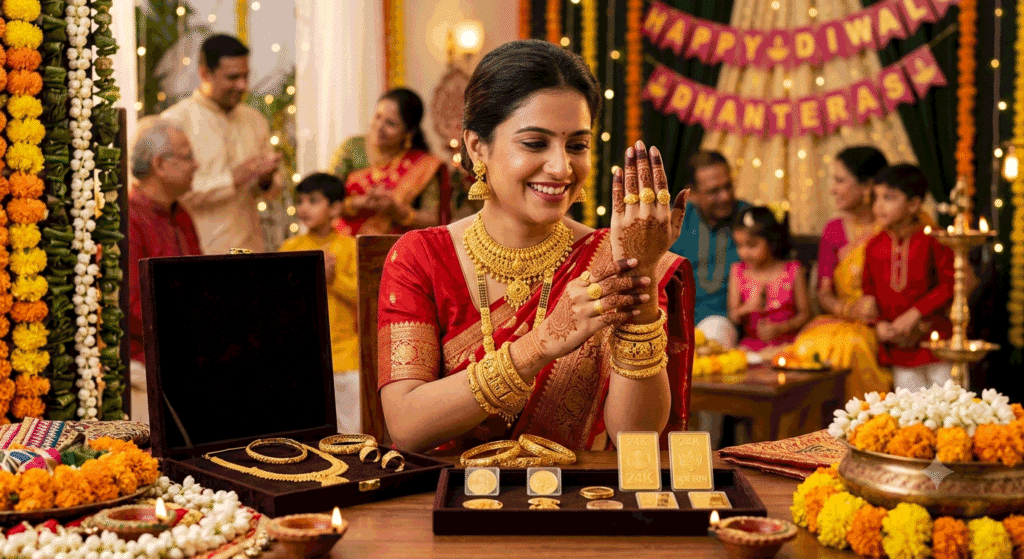
In India, gold jewellery is much more than a fashion accessory. It is closely connected with traditions, weddings, festivals, family celebrations, and investments. Many families purchase gold jewellery during auspicious occasions such as Akshaya Tritiya, Dhanteras, Diwali, and weddings because gold is considered a symbol of wealth, good fortune, and financial security.
Unlike many other metals, gold does not rust, tarnish, or corrode easily. This makes it one of the most reliable precious metals for everyday jewellery. Whether you are buying your first gold ring or planning to invest in a bridal jewellery set, understanding the basics of gold jewellery can help you make a better purchasing decision.
This complete guide explains everything a beginner should know, including gold purity, karat system, hallmark certification, pricing, jewellery types, buying tips, maintenance, and frequently asked questions.
Why is Gold So Popular?
Gold has been admired for thousands of years because of its unique physical and financial properties. It combines luxury with long-term value, making it one of the most preferred precious metals worldwide.
Some of the main reasons why gold jewellery remains popular include:
- Beautiful natural yellow shine
- Excellent durability
- Does not rust or corrode
- High resale value
- Trusted investment option
- Suitable for every age group
- Perfect for weddings and festivals
- Easy to redesign into new jewellery
- Accepted worldwide as a valuable precious metal
Gold also holds emotional value because jewellery is often passed from one generation to another as family heirlooms.
A Brief History of Gold Jewellery
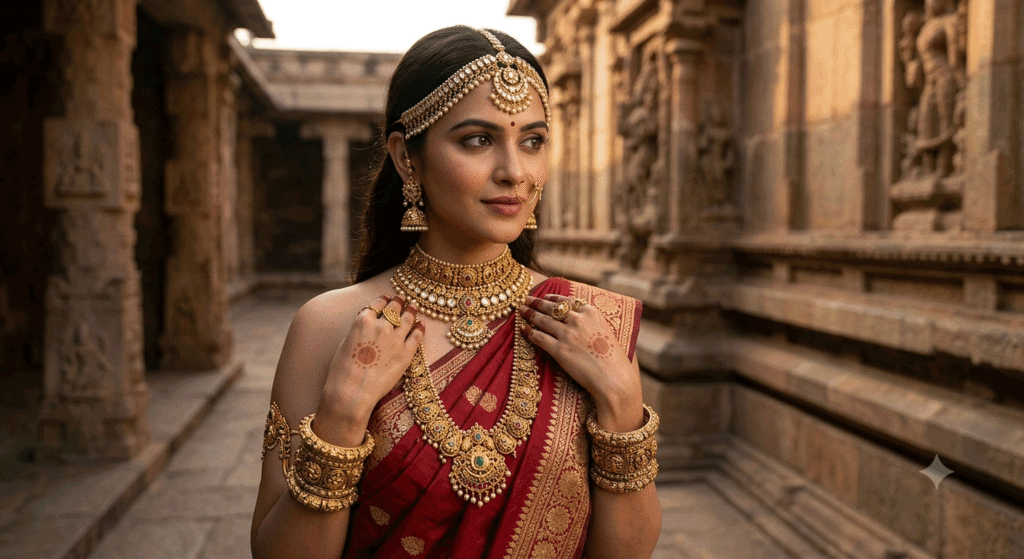
Gold jewellery has been used for more than 5,000 years. Ancient civilizations such as Egypt, Mesopotamia, Greece, and Rome crafted beautiful gold ornaments for kings, queens, and nobles. Archaeological discoveries show that gold was one of the earliest metals used for making jewellery because it is naturally soft and easy to shape.
In India, gold jewellery has always played an important role in culture and tradition. Historical records show that gold ornaments were worn during religious ceremonies, royal events, and weddings. Even today, gold remains an essential part of Indian bridal jewellery and festive celebrations.
Modern jewellery manufacturing combines traditional craftsmanship with advanced technologies such as CAD design, 3D printing, precision casting, laser welding, and hand finishing. These techniques allow jewellers to create intricate and durable designs while maintaining high quality.
What Makes Gold Special?
Gold is a precious metal with several unique characteristics that make it ideal for jewellery.
| Property | Benefit |
|---|---|
| Does not rust | Long-lasting beauty |
| Soft and flexible | Easy to create detailed designs |
| High resale value | Better investment |
| Rare metal | Premium value |
| Hypoallergenic (high purity) | Comfortable for many people |
| Easy to recycle | Environmentally friendly |
Because pure gold is naturally soft, it is usually mixed with other metals such as silver, copper, zinc, or palladium to improve strength and durability for everyday wear.
Common Types of Gold Jewellery
Gold jewellery is available in many beautiful forms. Each type is designed for different occasions, personal styles, and traditions.
Some of the most popular gold jewellery categories include:
- Gold Rings
- Gold Earrings
- Gold Necklaces
- Gold Chains
- Gold Pendants
- Gold Mangalsutras
- Gold Bangles
- Gold Bracelets
- Gold Nose Pins
- Gold Anklets
- Gold Kada
- Gold Coins
- Gold Idols
- Gold Gift Items
Every jewellery piece can be crafted in different purity levels, colours, and designs according to customer preferences.
Who Should Buy Gold Jewellery?
Gold jewellery is suitable for almost everyone. Whether you are purchasing jewellery for daily wear, gifting, weddings, festivals, or investment, gold offers an excellent balance of beauty and long-term value.
It is especially popular among:
- Women looking for elegant daily or occasion wear
- Men who prefer rings, chains, bracelets, or kadas
- Parents buying jewellery for children
- Brides and grooms preparing for weddings
- Investors seeking long-term wealth preservation
- Families purchasing jewellery for festivals and celebrations
Conclusion (Part 1)
Gold jewellery is much more than an ornament. It represents beauty, tradition, craftsmanship, and financial value. Understanding the basics of gold jewellery is the first step toward making informed purchasing decisions.
In the next part, we will cover one of the most important topics for every buyer: Gold Purity Explained – What Do 24K, 22K, 18K, and 14K Really Mean? We will also include purity tables, practical examples, and buying recommendations so your readers can confidently choose the right gold jewellery.
Gold Purity Explained – What Do 24K, 22K, 18K, 14K and 9K Really Mean?
One of the most common questions buyers ask before purchasing gold jewellery is, “What do 24K, 22K, 18K, 14K, and 9K gold actually mean?” Understanding gold purity is essential because it directly affects the jewellery’s value, durability, colour, and price.
Many people assume that higher karat gold is always better. While higher purity means more gold content, it does not always make the jewellery the best choice for everyday use. Different purity levels are designed for different purposes. For example, 24K gold is ideal for investment, while 18K gold is often preferred for diamond jewellery because of its strength.
This guide will help you understand the gold karat system in a simple and practical way so that you can confidently choose the right gold jewellery.
What is Gold Purity?
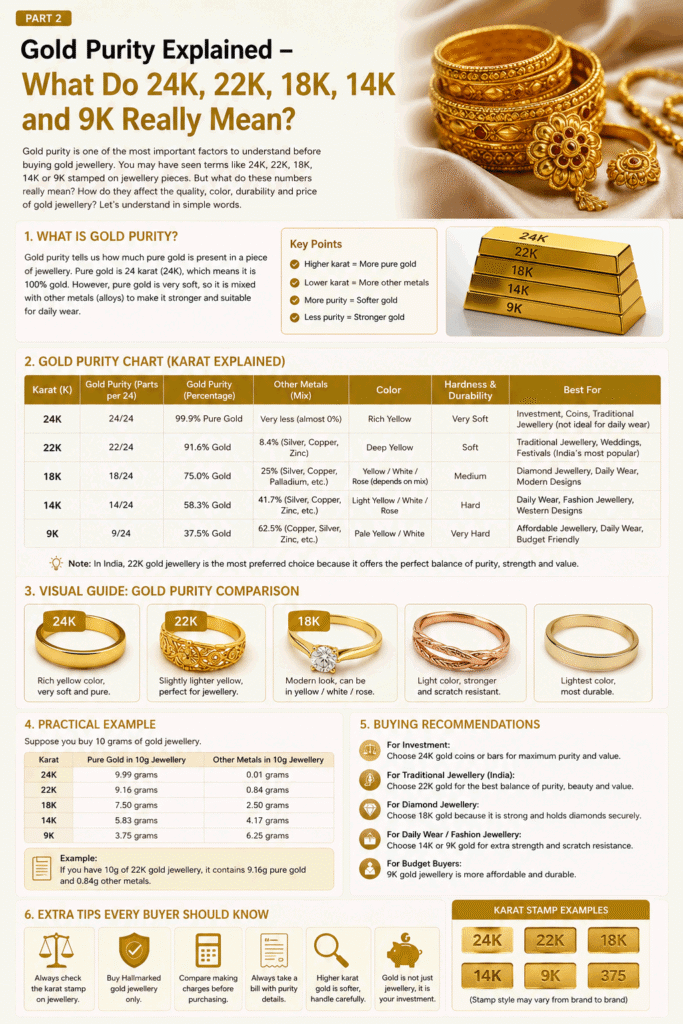
Gold purity refers to the percentage of pure gold present in a jewellery piece. Since pure gold is naturally very soft, jewellers mix it with other metals such as silver, copper, zinc, nickel, or palladium to make it stronger and more durable.
The higher the karat, the more pure gold the jewellery contains.
For example:
- 24K Gold = Almost Pure Gold
- 22K Gold = Mostly Gold with a small amount of alloy metals
- 18K Gold = Gold mixed with stronger metals
- 14K Gold = More durable with lower gold content
- 9K Gold = Contains the least amount of gold among common jewellery grades
What Does “K” Mean in Gold?
The letter “K” stands for Karat, which is the unit used to measure gold purity.
Pure gold is considered 24 Karat (24K).
Every karat represents 1 part out of 24 parts.
For example:
- 24K = 24 out of 24 parts are gold
- 22K = 22 out of 24 parts are gold
- 18K = 18 out of 24 parts are gold
- 14K = 14 out of 24 parts are gold
- 9K = 9 out of 24 parts are gold
Gold Purity Chart
| Gold Karat | Gold Purity | Percentage of Pure Gold | BIS Fineness Mark | Best For |
|---|---|---|---|---|
| 24K | 24/24 | 99.9% | 999 | Coins, Bars, Investment |
| 23K | 23/24 | 95.8% | 958 | Traditional Jewellery (Rare) |
| 22K | 22/24 | 91.6% | 916 | Indian Gold Jewellery |
| 21K | 21/24 | 87.5% | 875 | Middle Eastern Jewellery |
| 18K | 18/24 | 75.0% | 750 | Diamond Jewellery |
| 14K | 14/24 | 58.5% | 585 | Daily Wear Jewellery |
| 9K | 9/24 | 37.5% | 375 | Budget Jewellery |
Understanding Each Gold Purity
24K Gold (99.9% Pure Gold)
24K gold is the purest form of gold available. It contains almost no alloy metals and has a rich natural yellow colour.
Advantages
- Highest purity
- Excellent investment option
- Maximum resale value
- Bright natural yellow shine
- Ideal for gold coins and bars
Disadvantages
- Very soft
- Scratches easily
- Can bend under pressure
- Not suitable for most daily-wear jewellery
Best For
- Gold Coins
- Gold Bars
- Investment
- Long-term wealth preservation
22K Gold (91.6% Pure Gold)
22K gold is the most popular choice for traditional jewellery in India. It contains 91.6% pure gold and 8.4% alloy metals, making it stronger than 24K gold while maintaining a luxurious appearance.
Advantages
- High purity
- Excellent resale value
- Traditional rich yellow colour
- Ideal for wedding jewellery
- Perfect balance between beauty and strength
Best For
- Bangles
- Necklaces
- Chains
- Mangalsutras
- Earrings
- Pendants
- Bridal Jewellery
18K Gold (75% Pure Gold)
18K gold contains 75% pure gold and 25% alloy metals. It is stronger than 22K gold, making it a preferred choice for jewellery with diamonds and gemstones.
Advantages
- Strong and durable
- Holds diamonds securely
- Available in yellow, white, and rose gold
- Modern luxury appearance
- Less prone to bending
Best For
- Diamond Rings
- Engagement Rings
- Designer Jewellery
- Luxury Collections
- White Gold Jewellery
- Rose Gold Jewellery
14K Gold (58.5% Pure Gold)
14K gold contains 58.5% pure gold and 41.5% alloy metals. It is highly durable and suitable for everyday jewellery.
Advantages
- Very durable
- Scratch resistant
- Affordable
- Suitable for daily wear
- Lightweight
Best For
- Office Wear
- Daily Rings
- Bracelets
- Chains
- Children’s Jewellery
9K Gold (37.5% Pure Gold)
9K gold contains 37.5% pure gold and a larger proportion of alloy metals. It is commonly used in some international markets for affordable jewellery.
Advantages
- Budget-friendly
- Very durable
- Strong enough for everyday use
Disadvantages
- Lower gold content
- Lower resale value
- Less vibrant gold colour
Best For
- Fashion Jewellery
- Budget Collections
- Everyday Accessories
Karat vs Purity Percentage
| Karat | Pure Gold | Other Metals |
|---|---|---|
| 24K | 99.9% | 0.1% |
| 22K | 91.6% | 8.4% |
| 18K | 75.0% | 25.0% |
| 14K | 58.5% | 41.5% |
| 9K | 37.5% | 62.5% |
Which Gold Purity Should You Choose?
The right choice depends on your purpose.
Choose 24K Gold if:
- You are buying gold for investment.
- You want maximum purity.
- You prefer coins or bars.
Choose 22K Gold if:
- You want traditional Indian jewellery.
- You are buying wedding jewellery.
- You want good resale value.
- You prefer classic yellow gold.
Choose 18K Gold if:
- You are buying diamond jewellery.
- You like modern designer jewellery.
- You want white gold or rose gold.
- You need extra durability.
Choose 14K Gold if:
- You need jewellery for everyday use.
- You have an active lifestyle.
- You want a more affordable option.
Choose 9K Gold if:
- Your budget is limited.
- You want fashionable jewellery for occasional wear.
- Resale value is not your main priority.
Gold Purity Comparison Table
| Feature | 24K | 22K | 18K | 14K | 9K |
|---|---|---|---|---|---|
| Purity | ⭐⭐⭐⭐⭐ | ⭐⭐⭐⭐ | ⭐⭐⭐ | ⭐⭐ | ⭐ |
| Strength | ⭐ | ⭐⭐⭐ | ⭐⭐⭐⭐ | ⭐⭐⭐⭐⭐ | ⭐⭐⭐⭐⭐ |
| Investment | ⭐⭐⭐⭐⭐ | ⭐⭐⭐⭐ | ⭐⭐ | ⭐ | ⭐ |
| Daily Wear | ⭐ | ⭐⭐⭐ | ⭐⭐⭐⭐ | ⭐⭐⭐⭐⭐ | ⭐⭐⭐⭐⭐ |
| Wedding Jewellery | ⭐⭐ | ⭐⭐⭐⭐⭐ | ⭐⭐⭐ | ⭐⭐ | ⭐ |
| Diamond Jewellery | ⭐ | ⭐⭐ | ⭐⭐⭐⭐⭐ | ⭐⭐⭐⭐ | ⭐⭐ |
Practical Buying Examples
Example 1: Bridal Necklace
A bride wants a traditional Indian necklace with excellent resale value.
Recommended: 22K Gold
Example 2: Diamond Engagement Ring
A customer wants a diamond ring that will be worn every day.
Recommended: 18K Gold
Example 3: Gold Investment
A buyer wants to invest in gold for the long term.
Recommended: 24K Gold Coins or Bars
Example 4: Office Wear Chain
Someone wants a lightweight chain for daily use.
Recommended: 14K Gold
Example 5: Fashion Jewellery
A student wants affordable jewellery with a modern design.
Recommended: 9K Gold (where commonly available).
Buying Recommendations
Before purchasing any gold jewellery:
- ✔️ Always check the BIS Hallmark.
- ✔️ Verify the HUID (Hallmark Unique Identification) number.
- ✔️ Ask for a proper tax invoice.
- ✔️ Understand the making charges before payment.
- ✔️ Compare gold rates from trusted jewellers.
- ✔️ Buy from a reputed jeweller who provides transparent pricing and after-sales support.
Internal Links (Add Later)
After publishing more articles, link this page to:
- 22K vs 24K Gold – Which is Better?
- What is BIS Hallmark?
- How Gold Jewellery Prices are Calculated
- Gold Rate Today
- Gold Jewellery Buying Guide
- How to Clean Gold Jewellery


About author

Add comment